
Natasha Walker’s journey as a writer and educator is defined by her passion for exploring the human experience through poetry. Her collections invite us to pause, reflect, and connect with our deepest emotions. This blog is a tribute to Natasha’s unique perspective and the powerful impact of her work in contemporary poetry collections.
Celebrating Natasha Walker: A Voice for Contemporary Poetry
Natasha Walker, author of The Ponderings of Me, Myself and I, brings laughter, reflection, and raw emotion to her exploration of themes such as love, loss, and identity. Her sincerity connects deeply with readers and students alike, making her work resonate widely.
Natasha’s contemporary poetry collection showcases her gift for distilling complex feelings into vivid, relatable verse. From her childhood spent lost in books to her present role as a storyteller and educator, Natasha’s enthusiasm and authenticity make her work truly unforgettable.
What Makes a Contemporary Poetry Collection Stand Out?
Poetry is one of the oldest artistic expressions developed by humankind, characterised by its manifestation in verse, and in some cases also in prose; that is, a set of words that respect rhythm and metre, and natural linguistic expression not subject to rhyme or metre, respectively. Meanwhile, contemporary poetry refers to expressions of this type from the last one hundred years.
Influenced by the Avant-Gardes of the Early 20th Century
Contemporary poetry collections differ substantially from the poetry of earlier times because they are thoroughly steeped in and influenced by the avant-garde movements of the last century, which challenged the classical approaches to meter and rhyme that had dominated the poetic scene for many years.
Greater boldness and experimentation
In simpler terms, Natasha Walker’s contemporary poetry collection embraces greater boldness and experimentation, which clearly implies moving away from the classical methodology long respected.
A shift away from meter and rhyme and a focus on free verse
The main actions are to move away from metre and rhyme, elements so characteristic of poetry since its beginnings.
Natasha Walker’s contemporary poetry collection is an artistic expression that began to stand out in the second half of the last century, once it broke free from the so-called postwar literature that had prevailed until then. This was marked by the emergence of a new generation of poets whose styles were decidedly different from those of their predecessors.
Natasha pays close attention to form, something its predecessor had largely neglected in its conception of the poetic act. Another characteristic of this new poetry is its marked interest in mass phenomena that were just emerging.
It is important to note that, beyond these stylistic choices that contemporary poetry makes in relation to classical poetry, this literary expression, always, yesterday and today, is concerned with giving an aesthetic treatment to words with the aim of moving the reader eager for this type of literature and, of course, allowing them, through this special treatment, to evoke images.
Natasha refers to poetry as the art of expressing emotions, ideas, and experiences through language, with rhythm, imagery, and sensitivity, as seen in the works we recommend below.
Contemporary poetry has a unique power: to pierce us, move us, and make us stop the frenetic pace of the world to look inward.
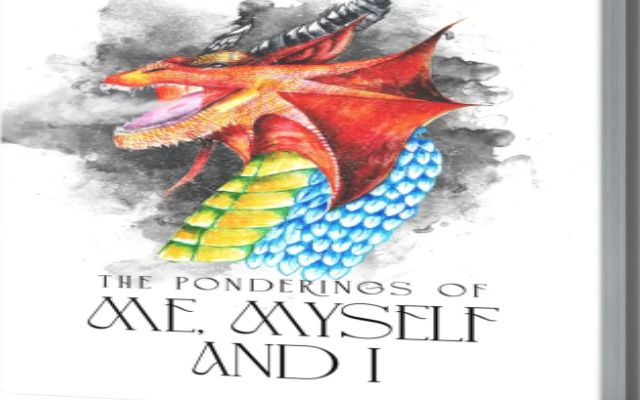
Natasha’s contemporary poetry collection deserves a place on your nightstand. These are poems to be read with your heart on your sleeve, embracing humanity in all its light and shadow. Natasha has captured the ephemeral, the eternal, and the profoundly every day in verses that resonate with authenticity. Don’t worry if you’re not a regular poetry reader; each of the poemshas something to offer, a spark that can ignite something within you.
Let’s begin with psychology in the contemporary poetry collection.
All of us who have ever read poems have experienced a range of emotions while processing them, whether epic, melancholic, or romantic. From the time we are babies, when we know nothing of the world around us; adults address us in rhythmic, stereotypical language. Music, rhymes, and “poetic” compositions can be used to learn basic concepts like numbers or colours. Given that, in ancient times, Greek poets who sang the Iliad or the Odyssey were able to reconstruct tens of thousands of verses in a fixed metre, we can intuitively conclude that poetic language possesses a property that makes it a powerful learning tool.
Reading Poetry as a Learning Tool
We generally learn best when something has an emotional impact, as it helps us retain the content. Therefore, the brain’s reward centers are involved in the process, linking reading poetry with experiencing pleasure, in this case, aesthetic pleasure. Can poetry facilitate these emotions? What areas of the brain are activated when listening to a poem?
Indeed, while listening to a poem, the primary mesolimbic reward circuits are activated; however, compared with studies on music, different nuclei—anterior versus posterior—are involved. Those related to poetic pleasure are more similar to those involved in olfactory and gustatory experiences, visual appeal, or monetary reward. In other words, these pleasures are more distinct than one might think.
Another interesting characteristic of this emotional activation is that the reward is perceived even when we are talking about negative emotions. We all know someone who loves tearjerkers. It is such an age-old topic that Aristotle himself pondered this paradox: why do people enjoy watching tragedies? Apparently, in a context of aesthetic pleasure, negative emotions have a powerful ability to induce engagement and concentration, thereby enhancing memory processes. In other words, they manage to motivate and focus attention while preserving the perceiver’s sense of security, who always knows that this negative emotion corresponds to a fictional reality external to themselves.
Discover a contemporary poetry collection that will make you pause, feel moved, and reflect.
Natasha Walker’s poetry stands as a testament to the lasting power of authentic expression. Her words encourage us to explore new perspectives, embrace our emotions, and find meaning in the everyday. If you’re looking for poetry that speaks to both heart and mind, Natasha Walker’s contemporary collection is the perfect place to begin your journey.
Ready to delve into the world of a contemporary poetry collection?